
Sourcing medical supplies isn’t like ordering office stationery. A single bad shipment of gloves, wound care items, or diagnostic tools can disrupt patient care, trigger compliance issues, or damage the trust patients place in a clinic or pharmacy. That’s exactly why Finding Trusted Medical Product Distributors has become one of the most searched concerns among healthcare buyers, clinic administrators, and retail pharmacy owners alike.
The good news is that with the right approach, separating dependable partners from risky ones isn’t guesswork. It comes down to knowing what to look for, understanding how the industry is structured, and asking the right questions before signing a purchase agreement.
Reliability Beats Price: Finding Trusted Medical Product Distributors
Unlike general retail wholesale, medical sourcing carries added weight: product authenticity, storage conditions, expiration tracking, and regulatory compliance all matter. A distributor that cuts corners on any of these can put an entire practice at risk. This is why buyers increasingly look beyond price alone and prioritize documented sourcing, verified inventory, and consistent fulfillment history when evaluating Medical Wholesale Suppliers.
Trust in this industry is built on three pillars: verifiable product origin, consistent order accuracy, and transparent communication when issues arise. A supplier that hides behind vague answers about where products come from is a red flag, regardless of how competitive their pricing looks on paper. This is exactly why Finding Trusted Medical Product Distributors should be treated as a process, not a one-time decision.
There’s also a financial angle buyers often underestimate. Switching suppliers mid-contract because of quality or fulfillment problems creates hidden costs — re-training staff on new ordering systems, re-verifying compliance paperwork, and absorbing downtime while a new relationship gets established. Vetting a distributor properly the first time is almost always cheaper than fixing a bad partnership later.
Key Steps for Finding Trusted Medical Product Distributors You Can Rely On
How to Choose Reliable Medical Wholesale Suppliers starts with due diligence before the first order is placed. A few practical checkpoints for Finding Trusted Medical Product Distributors:
Verify licensing and registration. Legitimate distributors should be able to share business registration details and, where applicable, state pharmacy or wholesale drug licenses.
Ask for product sourcing documentation. Reputable suppliers can trace inventory back to the original manufacturer or an authorized distribution chain.
Check order history and reviews. Look for consistency across multiple orders, not just a single positive testimonial.
Evaluate customer support responsiveness. How quickly and clearly a supplier resolves a shipping error often predicts how they’ll handle bigger issues later.
Confirm return and replacement policies. Damaged or expired stock should be replaceable without a drawn-out dispute process.
Buyers who skip this groundwork often end up switching suppliers within months, which costs more in the long run than a slightly higher unit price upfront.
Wholesale Suppliers vs Distributors: Understanding the Distinction
It’s common for buyers to use these terms interchangeably, but understanding Medical Wholesale Suppliers vs Medical Distributors helps set the right expectations. Wholesale suppliers typically sell in bulk at reduced per-unit pricing, often to retailers, clinics, or resellers who then distribute the product further. Distributors, on the other hand, usually manage a broader logistics function — including warehousing, order fulfillment, and sometimes manufacturer partnerships — and may serve both wholesale and direct-to-business customers.
In practice, many companies operate as both, blending wholesale pricing with distribution-level logistics. What matters most for a buyer isn’t the label but whether the company can consistently deliver genuine products on schedule, which is really the whole point of Finding Trusted Medical Product Distributors in the first place.
Traits That Set Top US Medical Wholesale Suppliers Apart
The Best Medical Wholesale Suppliers in USA share a few common traits: transparent sourcing, responsive account management, competitive but realistic pricing, and the operational capacity to handle recurring orders without delays. Buyers should also weigh how well a supplier’s catalog matches their actual needs rather than choosing based on the size of the product list alone.
This is where a company like MedCareDistributor fits into the conversation — buyers evaluating US-based wholesale partners for health and household products often compare suppliers on exactly these criteria: sourcing transparency, order reliability, and catalog relevance to their specific business type. It’s these same criteria that make Finding Trusted Medical Product Distributors so much easier once you know what to look for.
Sourcing Solutions for Hospitals and Large Healthcare Facilities
Larger healthcare facilities have different sourcing needs than a small retail pharmacy. Medical Wholesale Suppliers for Clinics and Hospitals need to support high order volumes, tight delivery windows, and strict compliance documentation for audits. For these buyers, a supplier’s ability to scale — without compromising product traceability — often matters more than the lowest possible per-unit cost.
Hospital procurement teams typically also value suppliers who can provide consolidated invoicing and consistent lead times across recurring bulk orders, since unpredictable delivery schedules can directly affect patient care continuity.
What Retail Pharmacies Need From Their Medical Supply Partners
Retail pharmacies and health stores have a different priority: turnover speed and shelf-ready packaging. Medical Supply Wholesalers for Retailers need to offer flexible order quantities, since retail demand fluctuates more than institutional demand. Retailers also benefit from suppliers who understand seasonal spikes — cold and flu season, for example — and can adjust fulfillment accordingly rather than leaving shelves empty during peak demand.
Supporting Independent Clinics With Flexible Supply Options
Smaller practices and independent healthcare businesses often face a unique challenge: they need the same product authenticity as large hospital systems, but without the purchasing power to negotiate hospital-scale discounts. Medical Suppliers for Small Healthcare Businesses that succeed in this space typically offer lower minimum order quantities, flexible payment terms, and personalized account support — treating a smaller clinic’s order with the same reliability as a larger one, just at a different scale.
Core Product Categories You’ll Find at Medical Wholesalers
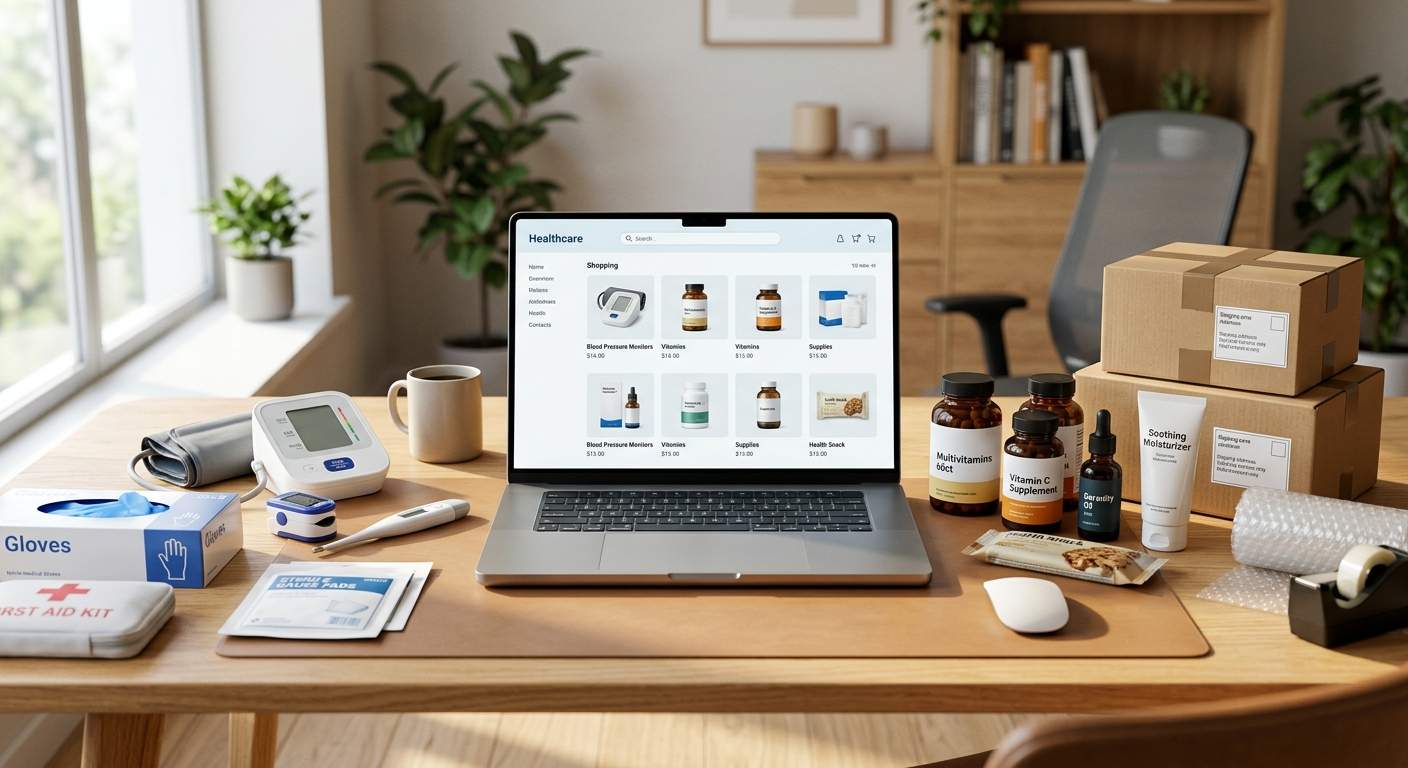
The Top Medical Products Offered by Wholesale Suppliers generally fall into a few core categories: personal protective equipment (gloves, masks, gowns), wound care and first aid supplies, diagnostic tools (thermometers, blood pressure monitors, pulse oximeters), over-the-counter health items, and household health essentials that clinics and retailers alike keep in steady rotation. Buyers should confirm that a supplier’s strongest categories actually align with their own demand before committing to a long-term contract.
Why Total Cost of Ownership Beats Lowest Price Alone
It’s tempting to default to whichever supplier quotes the lowest price, but in medical sourcing, the cheapest option is rarely the safest long-term choice. A lower unit price can sometimes reflect shortcuts in storage handling, weaker quality control, or inconsistent stock availability that only becomes apparent after a few order cycles. Instead, buyers should weigh total cost of ownership — accounting for return rates, delivery reliability, and how often orders arrive complete and on time — rather than comparing suppliers on price alone. A slightly higher per-unit cost from a dependable partner is almost always the better long-term investment for any healthcare business.
Understanding How Medical Distribution Companies Operate
At a basic level, Medical Distribution Companies Explained simply means understanding how these businesses connect manufacturers to the healthcare buyers who ultimately use the products. A distribution company typically manages purchasing relationships, warehousing, quality checks, and last-mile delivery — acting as the operational bridge so that clinics, hospitals, and retailers don’t need to negotiate directly with dozens of individual manufacturers. For buyers new to bulk healthcare purchasing, understanding this structure makes it easier to ask the right questions and set realistic expectations from the start, which is central to Finding Trusted Medical Product Distributors who can actually support long-term growth.
Final Thoughts
Sourcing medical products isn’t just a purchasing decision — it’s a decision that affects patient safety, business reputation, and long-term operating costs. Whether you’re a hospital procurement manager, a retail pharmacy owner, or running a small independent clinic, the fundamentals stay the same: verify sourcing, test responsiveness before scaling up orders, and choose partners who treat consistency as seriously as price. Taking the time to properly vet a distributor upfront almost always saves more time, money, and stress than it costs — which is the whole reason Finding Trusted Medical Product Distributors matters so much before you sign anything.
Frequently Asked Questions
Q1: How do I verify if a medical product distributor is legitimate? Ask for business registration details, manufacturer sourcing documentation, and any applicable state licenses. A legitimate distributor will provide this without hesitation — this is one of the simplest ways of Finding Trusted Medical Product Distributors you can actually rely on.
Q2: What’s the difference between a wholesale supplier and a distributor? Wholesale suppliers generally sell in bulk at discounted pricing, while distributors often manage broader logistics like warehousing and fulfillment. Many companies perform both functions.
Q3: Should small clinics expect the same pricing as hospitals? Not necessarily, but a reliable supplier should still offer fair terms, low minimum order quantities, and responsive support regardless of order size.
Q4: What are the biggest red flags when choosing a medical supplier? Vague answers about product sourcing, inconsistent order fulfillment, and slow responses to shipping issues are all warning signs worth taking seriously.