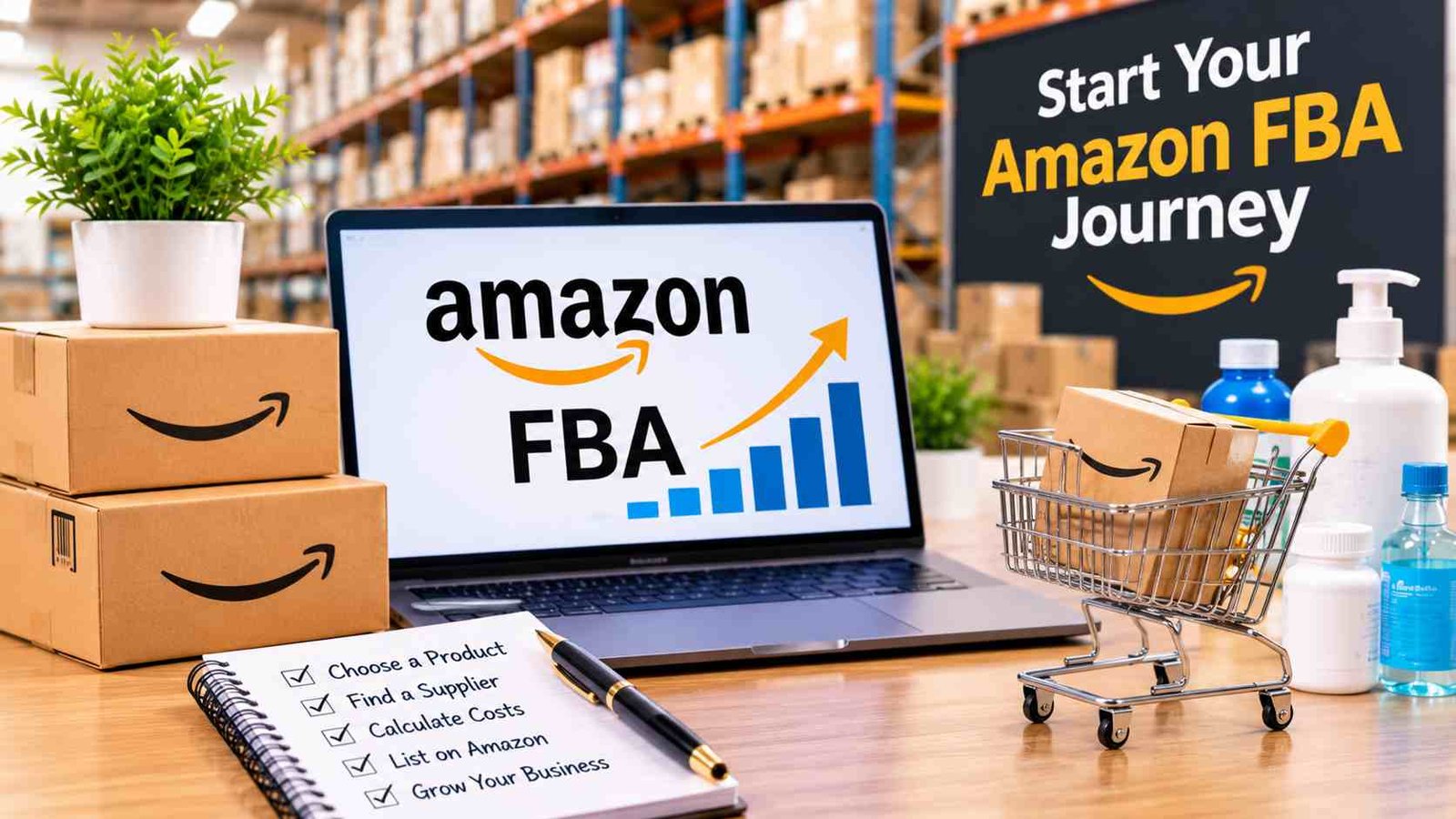
Starting an Amazon FBA business is easier when you break it into decisions: what to sell, where to buy it, what it will cost, and how to prepare the inventory. Understand the process before investing money.
With Fulfillment by Amazon (FBA), you send eligible products to Amazon’s fulfillment network. Amazon stores inventory and handles picking, packing, shipping, customer service, and returns for FBA orders. Sellers remain responsible for sourcing, pricing, product selection, and business management.
This guide focuses on getting started by reselling established branded products through wholesale.
Understand the Wholesale FBA Model
Some Amazon sellers create their own brands, while others buy products from retail stores or purchase branded goods in bulk from suppliers and distributors.
With Amazon FBA wholesale, you usually buy existing products that already have Amazon listings. You add your offer to the matching product page, send eligible stock to Amazon, and compete with other sellers offering the same item.
This can save you from developing a new product for every listing. However, not every brand or product is open to every seller. Some require approval, and certain items have extra FBA requirements.
1. Create Your Amazon Seller Account
Begin by registering through Amazon Seller Central. Choose a selling plan based on your expected sales and the tools you need. Amazon offers Individual and Professional plans with different fees and features, so review current pricing before choosing one.
Registration may require a government-issued ID, contact details, bank information, a chargeable credit card, tax details, and business or address documents. Requirements depend on your location and business type, so use information that matches your official records.
You do not always need an LLC to sell on Amazon. Individuals can register too, but local tax and licensing rules still apply. After registration, learn Seller Central, where you manage listings, inventory, orders, payments, and account health.
2. Choose a Category You Can Manage
Begin with one or two categories you understand instead of researching every type of product. Options may include household essentials, personal care, pet supplies, grocery products, and health and wellness items.
Each category has different customer needs and product requirements. Some items have expiration dates, special packaging rules, storage needs, or selling restrictions. A product that looks simple may still need extra checks before it can be listed or sent to FBA.
Consider your budget, storage space, sourcing options, and familiarity with the category. A focused range is easier to understand than buying products from several categories without knowing their requirements.
3. Research Each Product Before Buying
A promising Amazon wholesale product should be judged by more than its current selling price. Check the brand, size, model, color, pack quantity, condition, and product identifier. A single unit and a multipack are different offers, even when their titles look similar.
Review sales rank history, price changes, competing sellers, and signs of regular demand. Research tools provide estimates, not guaranteed sales figures, so avoid relying on one day’s data. Check eligibility in Seller Central before ordering because some brands and products require approval or are not eligible for FBA..
Keep a simple product sheet with the ASIN, size, wholesale price, expected selling price, competing offers, estimated fees, supplier, and approval requirements.
4. Work Out the Full Cost
The difference between the wholesale price and Amazon selling price is not your profit. Include purchasing, shipping, preparation, Amazon fees, storage, and other relevant expenses such as advertising or returns.
For example, if an item sells for $24.99, costs $10.00 wholesale, needs $1.00 for inbound shipping and preparation, and has $7.00 in estimated Amazon fees, $6.99 remains before other expenses. This is an illustration, not a profit guarantee. Actual fees depend on category, size, weight, fulfillment method, and current fee rules.
Also test a lower selling price. A product that only works at one high price may carry more risk than an item that can handle a reasonable price change.
5. Compare Wholesale Suppliers Carefully
Finding a product is only half the sourcing process. You also need a business that can provide genuine inventory and explain its terms.
When comparing Amazon FBA wholesale suppliers USA, review business details, product sources, stock availability, minimum order quantities, payment terms, shipping, and return policies—not just the unit price. Confirm that products are new and suitable for resale, and keep accurate invoices and purchase records. An invoice does not guarantee Amazon brand approval or ungating.
The best wholesale suppliers for Amazon FBA offer clear product information, suitable order quantities, accurate records, and dependable communication. Before a large order, confirm stock and ask about future replenishment.
6. Match the Product to the Correct Listing
Once eligibility is confirmed, connect your offer to the correct Amazon listing. For an existing branded product, sellers commonly match their offer to the existing detail page rather than creating a duplicate.
Check the brand, size, model, variation, pack count, condition, and product identifier. A similar-looking item may not be the same product. An incorrect match can lead to customer complaints, returns, and listing problems.
Set your offer price using current market conditions and full costs. Decide what price still makes sense for your business instead of following every competitor price reduction.
7. Prepare and Send Inventory to Amazon
Prepare each unit according to the requirements shown in Seller Central. Depending on the item, this may include FNSKU labeling, protective packaging, bundling, or other preparation steps
Different products can have different preparation rules. Liquids, food, fragile goods, and products with batteries may need additional checks. Review eligibility and preparation requirements before sending cartons.
MEDCARE Distributor supports eligible wholesale orders with FBA preparation services such as product labeling, packaging, and bundling. Confirm which services apply to your products and order.
8. Monitor Sales Before Reordering
Your work does not end when Amazon receives the shipment. Check Seller Central to confirm the inventory has been received and made available for sale. Then monitor sales, prices, competing offers, fees, returns, and remaining stock.
Avoid reordering just because the first few units sell. Review performance over a reasonable period and compare actual results with your estimates. Demand can slow, prices can change, and new sellers can enter the listing.
Before buying again, consider remaining inventory, recent sales, supplier lead time, available cash, and possible price changes. Keep money aside for operating expenses rather than putting your full budget into stock.
Build a Simple Routine for Your First Month
During the first month, set aside time each week to review your account rather than checking sales only when you receive an order notification. Look at inventory status, pricing, customer feedback, returns, and account health. Keep notes about unexpected costs or shipment issues. These small reviews help you spot problems early and give you useful information before the next purchase.
Common Mistakes New Sellers Should Avoid
Avoid buying before checking product restrictions, treating revenue as profit, ordering too many units without demand evidence, choosing a supplier only because of its low price, ignoring pack-size differences, or reordering without reviewing actual sales.
A careful first purchase is often more useful than a large order based on incomplete research.
Start Your Wholesale Journey With MEDCARE Distributor
MEDCARE Distributor supplies wholesale inventory for Amazon FBA and Walmart WFS sellers across health and household, personal care, wellness, and related categories. Eligible orders can also receive FBA preparation, labeling, packaging, and bundling support.
Review available products, stock, pricing, and order requirements to see what fits your business. Eligible buyers can apply for a wholesale account to access purchasing information and evaluate inventory for their selling strategy.
Visit MEDCARE Distributor or apply for a wholesale account.
Frequently Asked Questions
1. How much money do I need to start Amazon FBA?
There is no fixed amount. Your budget depends on product cost, order quantity, shipping, preparation, Amazon fees, and the working capital you keep available.
2. Can beginners start Amazon FBA with wholesale products?
Yes. Beginners can buy existing branded products from wholesale suppliers, provided they meet Amazon’s product, brand, and account requirements.
3. How do I find the best wholesale suppliers for Amazon FBA?
Compare business details, product sources, invoices, prices, minimum order quantities, stock availability, shipping terms, and communication before ordering.
4. Does Amazon handle everything after I send products to FBA?
Amazon handles storage and eligible order fulfillment, including picking, packing, shipping, and customer service. Sellers remain responsible for sourcing, listings, pricing, inventory planning, and account compliance.
Conclusion
Starting Amazon FBA means learning how to choose products, understand costs, source inventory, and manage orders. Set up your seller account, research a category you can manage, check product eligibility, and compare wholesale suppliers before buying. Then calculate the full expenses and prepare shipments according to Amazon’s instructions.
Your first product does not need to be a large order. It needs to be a well-researched decision that helps you understand the business. Review the results, learn from the experience, and use that information to plan future purchases.