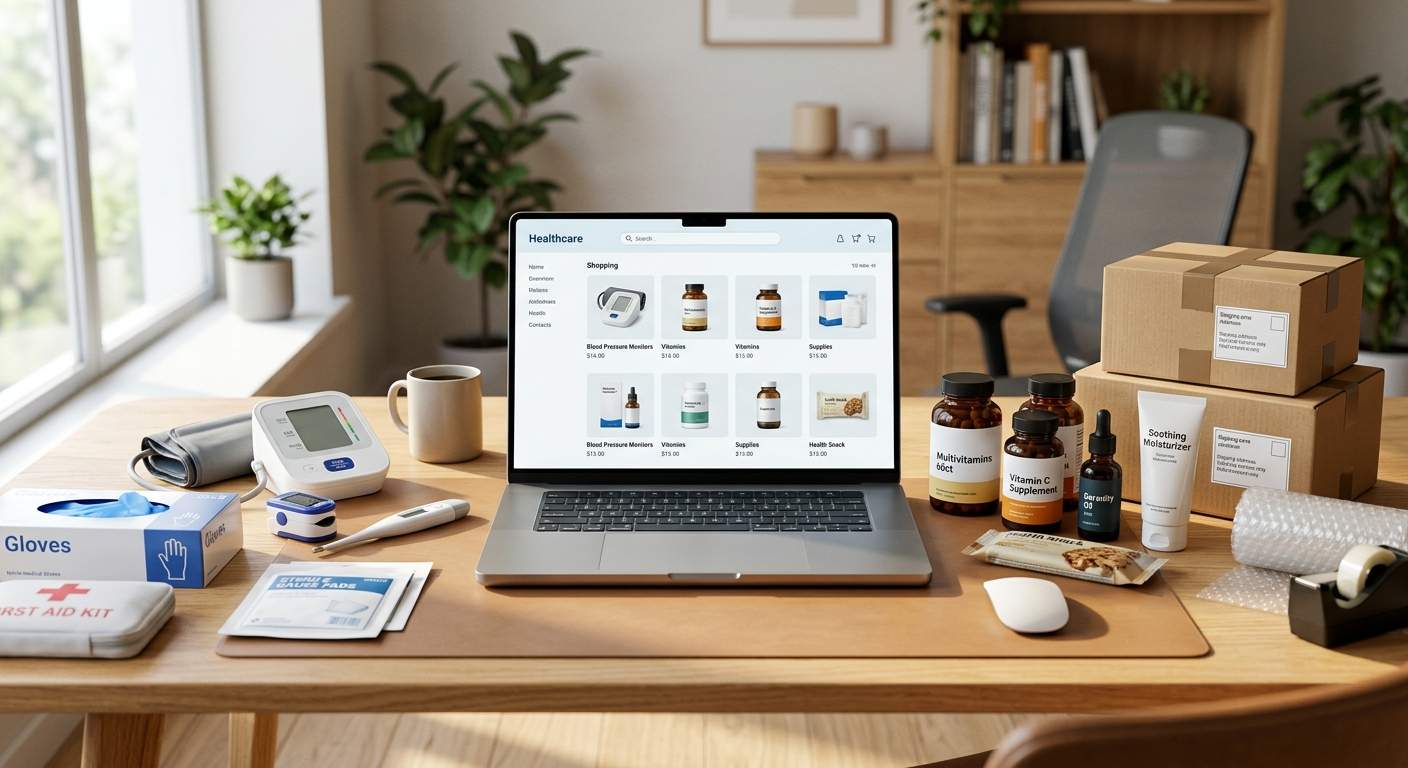

Running a healthcare retail business — whether it’s a pharmacy, a medical equipment store, or a multi-location clinic supply chain — depends on one thing above all else: a dependable source of quality products at fair prices. That’s where medical wholesale suppliers come in. For retailers trying to keep shelves stocked, margins healthy, and patients served without delay, understanding how to work with the right Medical Supply Wholesalers for Retailers can make or break the business.
This guide breaks down everything retailers need to know: how to vet suppliers, what products to expect, how wholesalers differ from distributors, and how to build a sourcing strategy that scales with demand.
Why Sourcing Strategy Matters for Healthcare Retailers
Retailers in the medical space face a unique challenge. Unlike general retail, healthcare products carry regulatory requirements, expiration dates, and patient-safety implications. A single stockout can mean a patient goes without a needed device or medication. A single bad shipment can mean returns, complaints, or worse — compliance issues.
This is why Medical Supply Wholesalers for Retailers aren’t just a convenience; they’re a core part of the operational backbone. The right wholesale partner brings consistency, competitive pricing, and product breadth that a retailer simply can’t achieve by buying direct from dozens of individual manufacturers.
How to Choose Reliable Medical Wholesale Suppliers
How to Choose Reliable Medical Wholesale Suppliers is often the first question new retailers ask, and it’s the right one. A few criteria consistently separate dependable partners from risky ones:
1. Licensing and Compliance
Any legitimate supplier should be able to provide documentation proving FDA registration, state licensing, and adherence to Good Distribution Practices. If a supplier is vague about compliance, that’s a red flag.
2. Product Range and Consistency
Retailers need suppliers who can reliably restock the same SKUs month after month — not just offer a one-time deal. Consistency in supply is often more valuable than a slightly lower price.
3. Pricing Transparency
Reliable suppliers offer clear tiered pricing based on order volume, without hidden fees tacked on at checkout or shipping.
4. Customer Support and Order Fulfillment Speed
Fast, responsive support matters enormously when a retailer needs to resolve a shipping delay or product discrepancy quickly.
5. Reviews and Track Record
Checking references, testimonials, and industry reputation helps confirm a supplier’s reliability before committing to a long-term relationship.
Best Medical Wholesale Suppliers in USA: What Sets Them Apart
When retailers search for the Best Medical Wholesale Suppliers in USA, they’re usually looking for a combination of scale, reliability, and specialization. The top-performing wholesalers in the country typically share these traits:
- Wide warehouse networks that reduce shipping times across regions
- Strong relationships with major manufacturers, ensuring authentic, quality-verified products
- Dedicated account management for retail partners
- Competitive bulk pricing structures that scale with order size
Companies like MedCareDistributor have built their reputation by focusing on exactly these pillars — combining broad product catalogs with dependable logistics so retailers spend less time chasing suppliers and more time serving customers.
Medical Wholesale Suppliers for Clinics and Hospitals
While this guide focuses on Medical Supply Wholesalers for Retailers, it’s worth noting that Medical Wholesale Suppliers for Clinics and Hospitals often overlap with retail-focused suppliers, just at higher volumes and with additional compliance requirements (such as hospital-grade sterilization documentation). Retailers who understand this overlap can sometimes negotiate better terms by leveraging the same supplier relationships that serve larger institutional clients.
Medical Wholesale Suppliers vs Medical Distributors: What’s the Difference?
Many retailers use the terms interchangeably, but understanding Medical Wholesale Suppliers vs Medical Distributors helps clarify sourcing decisions.
- Wholesalers typically buy in bulk directly from manufacturers and resell to retailers, clinics, and other businesses — often at lower unit costs for large orders.
- Distributors frequently offer additional services: logistics support, inventory management tools, marketing co-op programs, and sometimes exclusive regional rights to certain product lines.
In practice, many companies — including established players in this space — function as both, blending wholesale pricing with distributor-level service, a nuance any solid Medical Supply Wholesalers for Retailers resource should clarify. Retailers should ask directly which model a potential partner follows, since it affects pricing structure, minimum order quantities, and support level.
Top Medical Products Offered by Wholesale Suppliers
Retailers sourcing from wholesalers can typically expect access to a broad catalog. Top Medical Products Offered by Wholesale Suppliers generally include:
- Personal protective equipment (PPE): gloves, masks, gowns, face shields
- Diagnostic tools: thermometers, blood pressure monitors, pulse oximeters
- Mobility aids: wheelchairs, walkers, canes, crutches
- Wound care supplies: bandages, dressings, antiseptics
- Disposable medical supplies: syringes, exam table paper, specimen containers
- Health and wellness products: supplements, first-aid kits, hygiene items
A diverse catalog matters because it lets retailers consolidate purchasing with fewer vendors — simplifying invoicing, shipping, and inventory management.
Medical Product Wholesale Distributors Guide: Building a Sourcing Workflow
For retailers new to bulk sourcing, a simple Medical Product Wholesale Distributors Guide can look like this:
- Audit current demand — Identify your highest-turnover SKUs and seasonal fluctuations.
- Shortlist 3–5 suppliers — Compare pricing, minimum order requirements, and delivery timelines.
- Request samples or trial orders — Never commit to large volumes without verifying quality first.
- Negotiate terms — Ask about volume discounts, payment terms, and return policies.
- Set up reorder triggers — Use inventory thresholds to automate restocking before you run out.
Benefits of Working with Medical Wholesale Suppliers
The Benefits of Working with Medical Wholesale Suppliers go beyond simple cost savings:
- Lower per-unit costs through bulk purchasing power
- Reduced vendor management overhead by consolidating orders
- Faster restocking thanks to established logistics networks
- Access to a wider product range than direct manufacturer relationships typically allow
- Better cash flow flexibility through negotiated payment terms
For small and mid-sized retailers especially, these advantages often determine whether a business can compete with larger chains on price and product availability.
Healthcare Wholesale Suppliers in USA: Regional Considerations
Not all Healthcare Wholesale Suppliers in USA operate the same way regionally, which is why Medical Supply Wholesalers for Retailers should always be evaluated on a regional basis. Retailers on the coasts may have access to more suppliers with shorter shipping times, while those in central or rural areas may need to weigh shipping costs against local supplier options. It’s worth asking any prospective supplier about warehouse locations and average delivery windows to your specific region before signing a contract.
Finding Trusted Medical Product Distributors
Finding Trusted Medical Product Distributors requires more than a quick search — it means verifying credentials, checking industry associations, and, where possible, speaking directly with other retailers who’ve worked with the supplier. Trade shows, healthcare industry directories, and referrals from peer retailers remain some of the most reliable discovery methods.
Medical Distribution Companies Explained
At a high level, Medical Distribution Companies Explained simply: these are businesses that sit between manufacturers and end buyers (retailers, clinics, hospitals), managing warehousing, logistics, and often value-added services like inventory forecasting. Understanding this role helps retailers set realistic expectations about what a distributor can and can’t do — for example, most distributors won’t customize product formulations, but they can often expedite shipping or offer flexible order minimums.
Medical Suppliers for Small Healthcare Businesses
Smaller operations often assume bulk wholesale pricing is out of reach, but many Medical Supply Wholesalers for Retailers, including Medical Suppliers for Small Healthcare Businesses, offer tiered minimum order quantities specifically designed for independent pharmacies, small clinics, and boutique medical retailers. It’s worth directly asking suppliers about small-business-friendly terms rather than assuming they only serve large chains.
Building a Long-Term Supplier Relationship
Sourcing shouldn’t be treated as a one-time transaction. The strongest retail operations treat their medical wholesale suppliers as ongoing partners — communicating regularly about upcoming demand, seasonal spikes, and new product needs. Retailers who build these relationships over time often gain access to early notice on new products, better payment terms, and priority handling during supply shortages.
This is an area where a company like MedCareDistributor aims to differentiate itself — not just as a one-time vendor, but as a long-term sourcing partner for retailers navigating an increasingly complex healthcare supply landscape.
Conclusion: Choosing the Right Partner for Long-Term Growth
Sourcing decisions ripple through every part of a healthcare retail business — from margins to customer satisfaction to compliance. Working with reliable Medical Supply Wholesalers for Retailers isn’t just about finding the lowest price; it’s about building a dependable, scalable supply chain that grows with your business.
Whether you’re a small independent pharmacy or a multi-location retail operation, taking the time to vet suppliers properly, understand pricing structures, and build long-term partnerships will pay off in fewer stockouts, better margins, and happier customers.
Ready to simplify your sourcing? Reach out to MedCareDistributor today to explore wholesale pricing, product catalogs, and partnership options built for retailers like you.
Frequently Asked Questions
What are medical supply wholesalers for retailers?
Medical supply wholesalers for retailers are businesses that sell medical products in bulk to retail stores, pharmacies, and clinics at discounted rates. They act as a middle layer between manufacturers and retail buyers, offering a wide product catalog, consistent stock availability, and pricing that scales with order volume.
How do I choose a reliable medical wholesale supplier?
Look for suppliers with verified FDA registration and state licensing, transparent pricing, consistent product availability, and strong customer support. Requesting a trial order and checking references from other retailers are also effective ways to confirm reliability before committing to a larger contract.
What’s the difference between a medical wholesaler and a medical distributor?
Wholesalers typically sell products in bulk at reduced per-unit prices, while distributors often add logistics, inventory management, and support services on top of product supply. Many companies blend both models, so it’s best to ask directly about the specific services included in any partnership.
What products can retailers typically buy from medical wholesale suppliers?
Retailers can usually source PPE, diagnostic tools, mobility aids, wound care supplies, disposable medical items, and general health and wellness products. Product range varies by supplier, so it’s worth confirming catalog breadth before choosing a long-term partner.